
Eddie Murphy
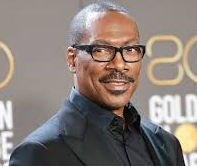
Full Name: Edward Regan Murphy
Date of Birth: April 3, 1961
Place of Birth: Brooklyn, New York, USA
Nationality: American
Profession: Actor, Comedian, Writer, Producer, Director, Singer
Genres: Comedy, Drama, Action, Animation
Years Active: 1976–Present
Notable Roles: “Beverly Hills Cop”, “Coming to America”, “The Nutty Professor”, “Shrek” series, “48 Hrs.”, “Trading Places”, “Dreamgirls”, and more.
Awards: Golden Globe Award, Primetime Emmy Award, 2 Academy Award Nominations, 10 Grammy Award Nominations
Early Life and Background
Eddie Murphy was born Edward Regan Murphy on April 3, 1961, in Brooklyn, New York, to Edmund Murphy, a transit police officer, and Lillian Murphy, a telephone operator. Murphy grew up in a working-class household with his two brothers and sisters. His father left the family when Murphy was young, and he was raised primarily by his mother, who was a strong influence on his upbringing.
At the age of 15, Murphy’s life took a significant turn when his mother fell ill, which led him to develop a sense of humor as a way to cope with the difficult circumstances. By using comedy as an outlet, Eddie began performing at local clubs and talent shows, eventually building up the courage to pursue a career in stand-up comedy.
Breakthrough in Stand-Up Comedy
Murphy’s first taste of professional success came in 1976 when he began performing stand-up at New York’s famous Catch a Rising Star comedy club. His unique blend of humor—combining observational comedy, impersonations, and a sharp, streetwise wit—quickly earned him recognition. He soon started appearing on the “Saturday Night Live” (SNL) sketch comedy show in 1980 at the age of 19.
As a cast member of SNL, Eddie Murphy became an instant star, known for his memorable characters like Buckwheat, Gumby, and Mr. Robinson (a parody of Mr. Rogers). Murphy’s charismatic style and ability to transform into different personalities became a hallmark of his comedy, earning him widespread acclaim and making him one of the most popular performers on the show.
Transition to Film: Early Career and Iconic Roles
By the early 1980s, Eddie Murphy’s success in comedy had transitioned into Hollywood stardom. In 1982, he starred in the action-comedy “48 Hrs.”, which became a major hit and marked his first leading role in a feature film. Murphy’s performance as a street-smart criminal partnered with a gruff cop (played by Nick Nolte) earned him praise for his natural comedic timing and on-screen presence.
In 1983, Murphy starred in “Trading Places”, a buddy comedy with Dan Aykroyd. The film was both a commercial success and a critical hit, and it helped to further solidify Murphy’s status as one of the biggest comedic stars in Hollywood. His performance as the clever street hustler Billy Ray Valentine showed his range as an actor, mixing humor with social commentary on race and class.
“Beverly Hills Cop” and Major Hollywood Stardom
In 1984, Murphy reached the peak of his commercial success with the release of “Beverly Hills Cop”, an action-comedy that became one of the highest-grossing films of the year. Murphy’s portrayal of Axel Foley, a wisecracking Detroit cop investigating a murder in upscale Beverly Hills, showcased his unique ability to blend comedy with action and dramatic moments. The film’s success catapulted Murphy into superstardom, and he became a household name.
“Beverly Hills Cop” spawned two sequels, with the third installment being released in 1994. While the sequels didn’t perform as well as the original, they still solidified Murphy’s status as a leading man in Hollywood.
“Coming to America” and “The Nutty Professor”
In 1988, Murphy starred in “Coming to America”, one of his most beloved films. In this romantic comedy, Murphy played Prince Akeem, an African prince who travels to the United States to find a wife who will love him for who he truly is, rather than his royal title. The film was a massive hit, both commercially and critically, and it featured Murphy playing multiple characters, which became a recurring theme in his career. His versatility and commitment to these roles—playing not only Akeem, but also his various comedic alter egos (including the barber and the preacher)—became one of the film’s key selling points.
In 1996, Murphy made a major return to comedy with “The Nutty Professor”, where he starred as Professor Sherman Klump, an overweight, good-natured scientist who creates a potion to transform into a slimmer, more confident version of himself. The film was a huge success, showcasing Murphy’s talent for playing multiple roles in the same film, with him portraying all of the members of the Klump family. The film’s success led to a sequel, “Nutty Professor II: The Klumps” in 2000.
The 1990s and Diversification of Roles
By the 1990s, Eddie Murphy had already proven himself as one of Hollywood’s most versatile and bankable stars. However, Murphy’s career saw a diversification in the types of roles he took on, including more dramatic and family-friendly films.
In 1996, he starred in “The Nutty Professor” and appeared in “Beverly Hills Cop III”, but he also made his mark in dramatic films like “The Distinguished Gentleman” (1992) and “Boomerang” (1992), where his comedic performances were paired with deeper, more complex characters.
One of his standout performances of the 1990s was in “Vampire in Brooklyn” (1995), where Murphy played a supernatural villain. This film was part of his transition to exploring more varied roles, mixing comedy with genres like horror and action.
Resurgence in the 2000s: “Shrek” and Dramatic Recognition
In the 2000s, Eddie Murphy found a new avenue for success, both as a voice actor and with more family-oriented films. His voice work as Donkey in “Shrek” (2001) and its sequels was widely praised, and his character became one of the most beloved in animation. The success of the Shrek franchise earned Murphy several award nominations and global recognition as one of the leading comedic voice actors in Hollywood.
In 2006, Murphy received an Academy Award nomination for his role in “Dreamgirls”, where he played James “Thunder” Early, a troubled R&B singer. The role marked a significant shift in Murphy’s career, showcasing his dramatic range and earning him numerous awards, including a Golden Globe Award for Best Supporting Actor.
Recent Projects and Legacy
In recent years, Eddie Murphy has continued to find success in a variety of projects. In 2019, he made a highly anticipated return to the “Coming to America” franchise with “Coming 2 America”, a sequel to the 1988 classic. The film was well-received by fans of the original, and it demonstrated that Murphy’s comedic style was still very much in demand.
Murphy also returned to stand-up comedy in 2019 with his Netflix special “Eddie Murphy: Raw”, which was highly anticipated by fans who had missed his legendary stand-up routines from the 1980s and early 1990s. His “Saturday Night Live” return in 2019 also marked a milestone in his career.
Murphy’s influence on comedy, television, and film is undeniable. His ability to seamlessly switch between genres—from action to comedy to drama to family films—has made him one of the most versatile and enduring stars in Hollywood history.
Notable Films and Projects
- “48 Hrs.” (1982)
- “Trading Places” (1983)
- “Beverly Hills Cop” (1984)
- “Coming to America” (1988)
- “The Nutty Professor” (1996)
- “Dr. Dolittle” (1998)
- “Shrek” series (2001–2010)
- “Dreamgirls” (2006)
- “Coming 2 America” (2021)
Awards and Recognition
- Golden Globe Award: Best Supporting Actor (Dreamgirls, 2007)
- Primetime Emmy Award: Best Comedy Special for “Saturday Night Live” (2019)
- Academy Award: Nominated for Best Supporting Actor (Dreamgirls, 2007)
- 10 Grammy Nominations: Recognizing his comedic albums
- NAACP Image Awards: Numerous wins and nominations
Legacy and Influence
Eddie Murphy’s career has left an indelible mark on both stand-up comedy and Hollywood. He broke barriers as one of the first Black actors to achieve true mainstream success in comedy and action films. His versatility, range, and ability to deliver memorable performances in both comedic and dramatic roles has set him apart from many of his contemporaries.
Murphy’s work, both in front of and behind the camera, has paved the way for future generations of comedians and actors to follow. His influence on comedy is immeasurable, and his place in Hollywood history is secure as one of its most groundbreaking and beloved figures.
Conclusion
Eddie Murphy’s evolution from a stand-up comic to one of the most influential and successful actors in Hollywood has been nothing short of extraordinary. His career spans over four decades and includes iconic roles in some of the most memorable films of the 20th and 21st centuries. Whether through his unforgettable characters, groundbreaking voice work, or dramatic performances, Eddie Murphy’s legacy as a comedy and acting legend remains firmly intact.
